As we continue making our way through the literature Common Core Standards, it’s important for your students to know about the different types of texts. In the 5th literature standard, we are looking at the parts of stories, poems, and dramas and how they build on each other. Here are some tips for teaching about types of texts and their parts.
Tips for Teaching About Types of Texts and Their Parts
**This post contains affiliate links and I will be compensated if you make a purchase after clicking on my links. I only recommend products that I use and love.
The first thing we need to do is to break down the standard at the different grade levels. It is really helpful to know what your students are expected to do in the grade level before yours and the grade level after yours. This allows you to differentiate your lessons and meet the needs of all your students.
First Grade
Important Skills to Teach:
- Characteristics of nonfiction books
- Characteristics of fiction books
- How books that tell stories are different from books that give information
I Can Statements:
- I can identify nonfiction books and explain how they give information.
- I can identify fiction books and explain how they tell stories.
- I can explain the differences between fiction and nonfiction books.
Download a week of 1st grade lesson plans to teach this standard.
Download a digital slideshow to assign for distance learning or as a center activity.
Second Grade
CCSS.ELA-LITERACY.RL.2.5 – Describe the overall structure of a story, including describing how the beginning introduces the story and the ending concludes the action.
Important Skills to Teach:
- How the beginning of a story introduces the characters, setting, and problem
- How the ending of a story explains how the problem is solved
- How to describe the plot of a story by breaking it into the beginning, middle, and end
I Can Statements:
- I can identify the characters, setting, and problem in the beginning of a story.
- I can explain how the problem is solved at the end of a story.
- I can describe the parts of a story by telling what happens at the beginning, in the middle, and at the end.
Download a week of 2nd grade lesson plans to teach this standard.
Download a digital slideshow to assign for distance learning or as a center activity.
Third Grade
CCSS.ELA-LITERACY.RL.3.5 – Refer to parts of stories, dramas, and poems when writing or speaking about a text, using terms such as chapter, scene, and stanza; describe how each successive part builds on earlier sections.
Important Skills to Teach:
- Definitions of the terms “chapter,” “scene,” and “stanza”
- How to identify the parts of stories, dramas, and poems
- How parts of texts build on what happened in earlier sections
I Can Statements:
- I can identify the chapters in a story and explain how later chapters build on earlier chapters in the book.
- I can identify the scenes in a drama and explain how later scenes build on earlier scenes in the drama.
- I can identify the stanzas in a poem and explain how later stanzas build on earlier stanzas in the poem.
Download a week of 3rd grade lesson plans to teach this standard.
Download a digital slideshow to assign for distance learning or as a center activity.
Fourth Grade
CCSS.ELA-LITERACY.RL.4.5 – Explain major differences between poems, drama, and prose, and refer to the structural elements of poems (e.g., verse, rhythm, meter) and drama (e.g., casts of characters, settings, descriptions, dialogue, stage directions) when writing or speaking about a text.
Important Skills to Teach:
- Poetry definitions, like “verse,” “rhythm,” and “meter”
- Drama definitions, like “casts of characters,” “settings,” “descriptions,” “dialogue,” and “stage directions”
- How poems, dramas, and prose are different based on their structures
I Can Statements:
- I can identify the elements of poems, like verse, rhythm, and meter.
- I can identify the elements of dramas, like casts of characters, settings, descriptions, dialogue, and stage directions.
- I can identify differences among the structures of poems, dramas, and prose.
Download a week of 4th grade lesson plans to teach this standard.
Download a digital slideshow to assign for distance learning or as a center activity.
Fifth Grade
CCSS.ELA-LITERACY.RL.5.5 – Explain how a series of chapters, scenes, or stanzas fits together to provide the overall structure of a particular story, drama, or poem.
Important Skills to Teach
- Review the definitions of the terms “chapters,” “scenes,” and “stanzas”
- How to identify the differences among stories, dramas, and poems
- How to explain how the chapters, scenes, and stanzas fit together
I Can Statements:
- I can identify the chapters in a story and explain how they fit together.
- I can identify the scenes in a drama and explain how they fit together.
- I can identify the stanzas in a poem and explain how they fit together.
Download a week of lesson plans to teach this standard.
Download a digital slideshow to assign for distance learning or as a center activity.
Suggested Books
This standard requires you to use a lot of different types of texts to help your students learn about the way they are organized and how the parts build on each other. For first grade, you will need fiction and nonfiction books so your students can see the differences between them. For second grade, a chapter book works well to help your students identify the parts of a longer story and explain how the chapters build on each other. For third, fourth, and fifth grade, you need poems that have stanzas, dramas that have scenes, and books that have chapters.
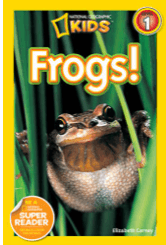
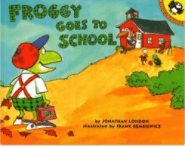
First Grade – Frogs and Froggy Goes to School
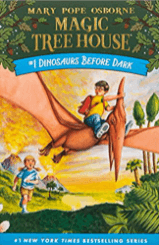
Second Grade – Dinosaurs Before Dark
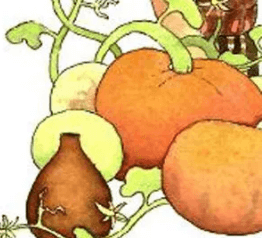
Third Grade – “A Worm in My Pocket” (poem) and “Pumpkin in a Jar” (drama)
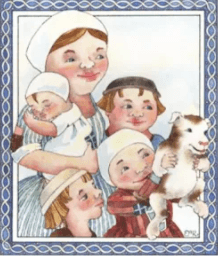
Fourth Grade – “Homework, I Love You” (poem) and “The Apple Dumpling” (drama)
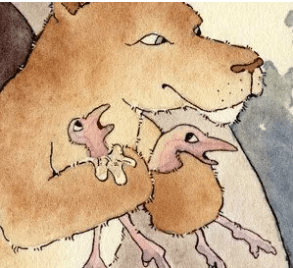
Fifth Grade – “Casey at Bat” (poem) and “Fur and Feathers” (drama)
Tips for Teaching Types of Texts and Their Parts
- Label the Parts. Give your students a printed copy of the type of text you’re studying. Discuss the different parts of it and have your students label them directly on the paper. For first grade, you could give them a nonfiction text and have them label the photographs, captions, and headings that don’t appear in a fiction text. For third, fourth, and fifth grade, you could give them a poem or a drama and work together to label the important parts. Then, they can keep it in their book box as a reference as they practice the rest of the standard.
- Use a box diagram to show the overall structure. Have the students set up a paper by drawing a box for each section of the text. For example, if they are reading a poem with 6 stanzas, they would draw 6 boxes. If they are reading a play with 3 scenes, they would draw 3 boxes. In each box, they should summarize what happened in each stanza or scene. Then, they should draw arrows connecting the first box to the second box. Below the arrow, they should explain how the event in the first box led to the event in the next box. They should continue doing this for each section of the text.
- Send your students on a Vocabulary Word Hunt. There is a lot of important vocabulary associated with this standard. Put all of the vocabulary words, like chapter, stanza, scene, cast of characters, meter, etc., on index cards. Put your students in groups and give each group a collection of texts, including chapter books, poems, and dramas. Call out a word and have them search through the texts to find an example of the word in action.
Other Helpful Resources
If you have students who are struggling with this standard, strategy groups and one-on-one conferences are a great way to differentiate and help all your students master it. These assessments will show you which students have mastered the standards and which students need extra practice.
1st Grade Common Core Literature Standard Assessments
1st Grade Common Core Informational Texts Standard Assessments
2nd Grade Common Core Literature Standard Assessments
2nd Grade Common Core Informational Texts Standard Assessments
3rd Grade Common Core Literature Standard Assessments
3rd Grade Common Core Informational Texts Standard Assessments
4th Grade Common Core Literature Standard Assessments
4th Grade Common Core Informational Texts Standard Assessments
5th Grade Common Core Literature Standard Assessments
5th Grade Common Core Informational Texts Standard Assessments
Get all the lesson plans you need to teach every Common Core Reading Standard for your grade level.
1st Grade Common Core Standards Bundle
2nd Grade Common Core Standards Bundle
3rd Grade Common Core Standards Bundle
4th Grade Common Core Standards Bundle
5th Grade Common Core Standards Bundle
You’re Invited!
Looking for more ways to differentiate your lessons and meet the needs of all your students without adding more to your plate?
Join The Differentiation Conversation Community, a free community for elementary teachers where we share practical differentiation strategies, ready-to-use resources, and encouragement to help you meet the needs of all your learners.
What Do You Think?
What are your best tips for teaching your students about the types of texts and their parts?
Let us know in the comments.

Leave a Reply